

Account-Based Marketing (ABM) is a strategy that many marketers are already familiar with. It focuses marketing resources on a carefully selected set of target accounts and uses personalized campaigns to engage them.
The result is often higher revenue in a shorter time frame. The process begins by identifying key prospects and then tailoring communication and marketing programs to the entire buying committee within those target organizations.
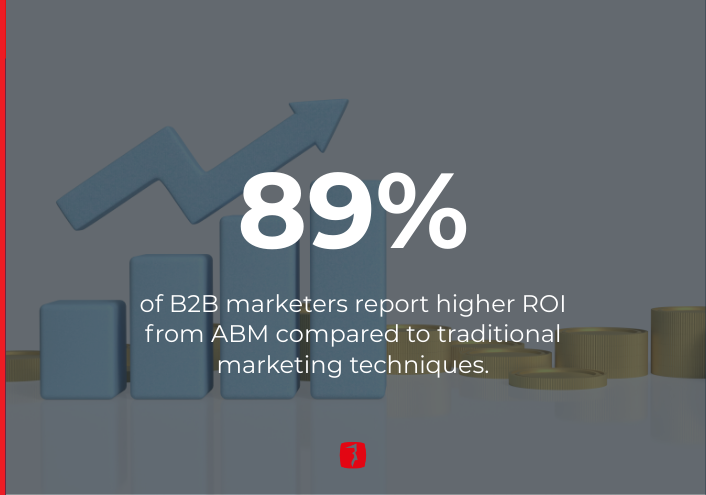
ABM provides a strong advantage when it comes to highly targeted campaigns that resonate with the intended audience. Data consistently shows that ABM remains one of the most effective ways to connect with high-value accounts.
It shortens the sales cycle by generating higher-quality leads and improves the customer experience.
Over the past two years, as in-person industry events were postponed, digital interactions increased significantly. This shift produced an enormous amount of digital content competing for attention.
In such an environment, customized content becomes even more important. The core principle of ABM is focusing on specific accounts with highly targeted content tailored to industries, job functions, and individual decision-makers.
Unlock the power of account intelligence
Technology plays an essential role in improving marketing efficiency. When we discovered N.Rich, we were researching tools that could help our clients implement more effective ABM strategies and improve their sales outreach.
The goal was to help companies build stronger pipelines by combining ABM advertising and intent data.
Many business developers struggle with pursuing low-quality accounts that show little or no purchasing intent. Our objective was to help them identify the best-fit accounts within their Ideal Customer Profile (ICP) and engage them at the right moment.
The days when marketers focused solely on collecting form submissions are largely behind us. Today, the goal is to deliver relevant information to the accounts that matter most to your sales team, exactly when their purchase intent is highest.
Approaching ABM sales outreach in this way creates a much more predictable impact on the sales funnel.
As a digital marketer, you likely want to move beyond treating marketing as a cost center. Ideally, marketing should function as a revenue-generating engine.
With the help of N.Rich, companies can identify high-value accounts and reach them with targeted ABM campaigns that engage the entire buying committee. The platform integrates with LinkedIn and supports retargeting strategies while clearly demonstrating how marketing efforts influence pipeline growth and revenue.
How N.Rich works
Engagement is a key indicator of success, as it reflects genuine interest in a product or service. Engagement signals can include website visits, clicks, video views, and content interactions.
Many advertising providers measure performance primarily through impressions. However, impressions alone can be misleading due to issues such as banner blindness, ads appearing below the fold, or even ad fraud.
N.Rich focuses instead on actual engagement, ensuring that interactions come from individuals who genuinely engage with your content. This approach results in higher-quality interactions and stronger conversion rates.
Modeling your Ideal Customer Profile (ICP)
Everything begins with defining your Ideal Customer Profile.
Within the N.Rich platform, companies can identify their best-fit target market using an AI-powered dynamic ICP and lookalike engine, supported by firmographic and technographic data.
The ICP calculation relies on your CRM data, including:
-
won and lost deals
-
deal size
-
sales cycle length
-
win rate
The ICP score updates dynamically as new opportunity data becomes available, allowing for increasingly precise targeting.
Defining the total addressable market
Once your ICP is defined, the next step is building segments and intent reports. N.Rich allows companies to create segments in several ways.
1. Import from CRM
Importing data directly from your CRM is useful when the system already contains relevant data points such as purchase history, deal size, or customer engagement metrics.
2. Firmographic and technographic segmentation
Using firmographic and technographic data allows marketers to filter prospects based on company characteristics such as size, industry, technology stack, or geographic location.
3. Lookalike audiences
Lookalike segmentation helps identify companies similar to your existing customers. By uploading a list of known customers or email addresses, the platform can find similar organizations likely to be interested in your offering.
4. ABM retargeting
Retargeting segments allow you to engage companies that have already interacted with your website or marketing content but have not yet converted.
Each of these methods helps create highly tailored segments that increase campaign effectiveness.
Another important step is monitoring buyer intent signals, including:
-
third-party intent data based on industry keywords or competitor searches
-
first-party intent signals such as website visits and content interactions
Analyzing this data helps identify when accounts are actively researching solutions.
Maximize exposure with ABM ads
Once ICPs and segments are defined, the next step is launching ABM advertising campaigns.
Through a network of B2B websites and digital channels, companies can distribute targeted advertising that reaches decision-makers across multiple platforms.
Campaign formats can include:
-
image ads
-
video ads
-
article promotions
The key is ensuring that the content addresses the specific needs and interests of the targeted buyer personas.
N.Rich helps capture the attention of these accounts, spark curiosity, and influence purchasing decisions.
Drive and convert buyer intent
After launching ABM campaigns, the next step is converting the generated interest into meaningful engagement.
This involves delivering relevant content across third-party platforms and guiding the target account’s buying journey toward your brand.
At the same time, marketers should identify accounts showing strong intent signals and create segments for remarketing campaigns or direct sales outreach.
When first-party intent begins to increase, it is time to identify the key decision-makers and start soft outreach.
Sales teams can use tools such as LinkedIn Sales Navigator, ZoomInfo, or Apollo to identify contacts and gather their information.
One effective tactic is tailoring outreach messages based on engagement data. For example, if an account interacts with content about GDPR compliance, your outreach message can focus on how your product helps address GDPR requirements.
Opportunity attribution
Opportunity attribution allows revenue teams to understand how marketing activities influence the creation and closing of sales opportunities.
Advertising campaigns play an important role across the entire sales funnel, from early awareness to final conversion.
Measurement tools help track the pipeline impact, revenue contribution, and performance of marketing campaigns at each stage of the funnel.
Analyzing these metrics helps identify which strategies generate the most qualified opportunities and where adjustments may be required.
Expected results from N.Rich
A successful ABM sales outreach strategy involves multiple touchpoints across different channels throughout the buyer journey.
Paid social and paid search campaigns often serve as effective entry points into that journey.
However, simply showing an advertisement and connecting a prospect with a sales team is not enough for a strong ABM strategy.
Using N.Rich allows companies to achieve stronger results when targeting high-value accounts. Businesses can increase engagement across buying committees through exposure on more than 5,000 B2B websites and social networks.
AI-powered optimization also helps companies maintain engagement during longer B2B sales cycles and maximize the return on their ABM campaigns.
By leveraging the capabilities of the N.Rich platform, companies can gain a competitive advantage through better targeting, smarter bidding strategies, and improved ROI.
Curious to learn more?
While personalized content is a key component of any ABM strategy, companies must also demonstrate that they truly understand their target accounts.
Combining ABM sales outreach with inbound marketing strengthens engagement and accelerates deal velocity.
If you are interested in exploring how N.Rich can support your ABM strategy, contact us to discuss how targeted ABM outreach can help generate more qualified leads and accelerate your pipeline.