

This is the moment you’ve been waiting for. You’ve built a successful company and are now promoting your products and services to customers. Despite this, you may notice that your website isn’t attracting as much traffic as you expected. You have described your business in detail, so there are no unanswered questions. You may believe you’ve done everything right. You may have even created videos and promoted your content on social media, but you’re still not generating traffic to your website.
What’s going wrong? Sometimes it comes down to three letters: SEO (Search Engine Optimization).
There are over a trillion pages of content available online. Not all of this content is properly indexed or organized, which makes it difficult for search engines to find what they are looking for. Finding the right information can feel overwhelming, and “needle in a haystack” barely describes the experience.
When it comes to online marketing, your business cannot function effectively without SEO. However, understanding all its components, including PPC practices, can be difficult because search algorithms are complex and constantly changing. It can be challenging to know whether the strategies you started using are producing the right results. Fortunately, several fundamental practices can help your website perform better in search engines and attract potential customers.
Focus on valuable content that attracts visitors
In the past, many webmasters relied heavily on technical SEO tactics to increase their rankings in search engine results pages (SERPs). While SEO remains important, updates to Google’s algorithm have made high-quality content even more critical.
Websites with valuable and relevant content are now more likely to rank higher than those with low-quality content. This aligns with Google’s long-standing focus on delivering the best possible user experience.
The headline of a website or article is often the first thing visitors notice, and it can determine whether they stay or leave. A compelling headline is important, but it must be supported by strong content that encourages visitors to return.
Your website may attract many curious visitors, but if the content lacks value, they are unlikely to come back.
Tips for improving your blog content
Headers make your articles easier to scan. They break content into clearly labeled sections and help readers quickly find the information they need. Using heading tags such as <h1> and <h2> also signals to search engines which keywords are most important within your article.
It can also be helpful to revisit older content and evaluate how it can be improved. This might include updating keyword placement, revising outdated information, or restructuring the article to improve readability.
Articles are a common form of content, but they are not always the most effective format. In some cases, a video may communicate information more efficiently than written content. Including custom-branded infographics can also improve engagement and make complex topics easier to understand.
The higher your website ranks in Google, the more backlinks it usually has
Google ranks pages based on multiple factors, including the relevance and trustworthiness of the information. Because the internet contains a large amount of unreliable or spam content, not all links are treated equally.
Google uses various algorithms to determine which links are trustworthy and relevant. This helps ensure that users receive accurate and reliable information.
One of the most important ranking factors is the number of backlinks pointing to your website. Backlinks are links from other websites that direct users to your content. Generally, the more high-quality backlinks your site earns, the stronger its visibility in search results.
The most effective way to earn backlinks is by creating valuable content that other websites naturally want to reference and share.
Link-building tips
Internal links connect different pages within your website. By linking related pages together, you can help improve the SEO performance of specific pages and guide visitors through relevant content.
Broken links, often called “dead links,” are links that return an error message when clicked. Having too many of these can negatively affect user experience and harm your site’s credibility.
Make sure your title is carefully written
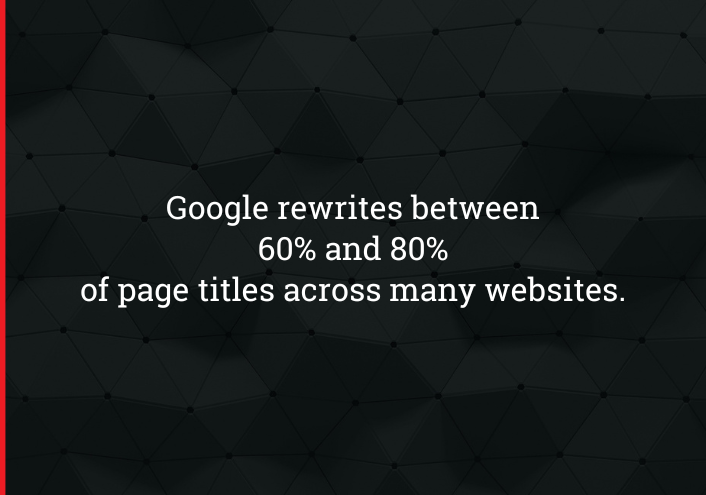
In many cases, Google’s algorithm modifies titles when it believes it can present the information more clearly to users.
Google typically limits desktop search result titles to approximately 600 pixels in width, although mobile results may allow slightly longer titles. Titles that exceed this limit are usually shortened with ellipses (…).
When does Google rewrite your titles?
Google may change titles in several situations:
- Titles that are too long or too short
- Repeated use of the same keyword
- Titles written in square brackets or parentheses
- Use of separators such as dashes (-) or pipes (|)
As SEO becomes increasingly important, it is essential to develop a strategy for monitoring what works and what needs improvement.
Effective SEO for B2B businesses ultimately focuses on providing helpful resources, products, and information to readers. Try to view your content from the customer’s perspective. Why are people searching for these terms? What problems are they trying to solve?
Any effort your company makes to educate and inform potential customers can significantly improve your visibility and credibility.
Contact our specialists when you’re ready to analyze your website in more detail and uncover the elements that may be limiting your growth.