

Landing pages remain a core component of modern digital marketing, especially in B2B environments where lead quality and intent matter more than volume. While tools and templates evolve, the purpose of a landing page stays the same: to convert focused traffic into qualified leads.
This article outlines current best practices for building effective landing pages in HubSpot, based on platform capabilities and widely accepted conversion optimization principles.
What Is a Landing Page and Why Does It Still Matter
A landing page is a standalone web page created with a single, specific conversion goal, such as downloading a resource, registering for an event, or requesting a demo.
Unlike blog posts or general website pages, landing pages:
-
Remove unnecessary navigation and distractions
-
Focus on one message and one action
-
Are directly tied to a specific campaign or offer
In HubSpot, landing pages are an integral part of the conversion path, typically connected to:
-
A form submission
-
An automated follow-up email
-
A dedicated thank-you page
Core Elements of an Effective HubSpot Landing Page
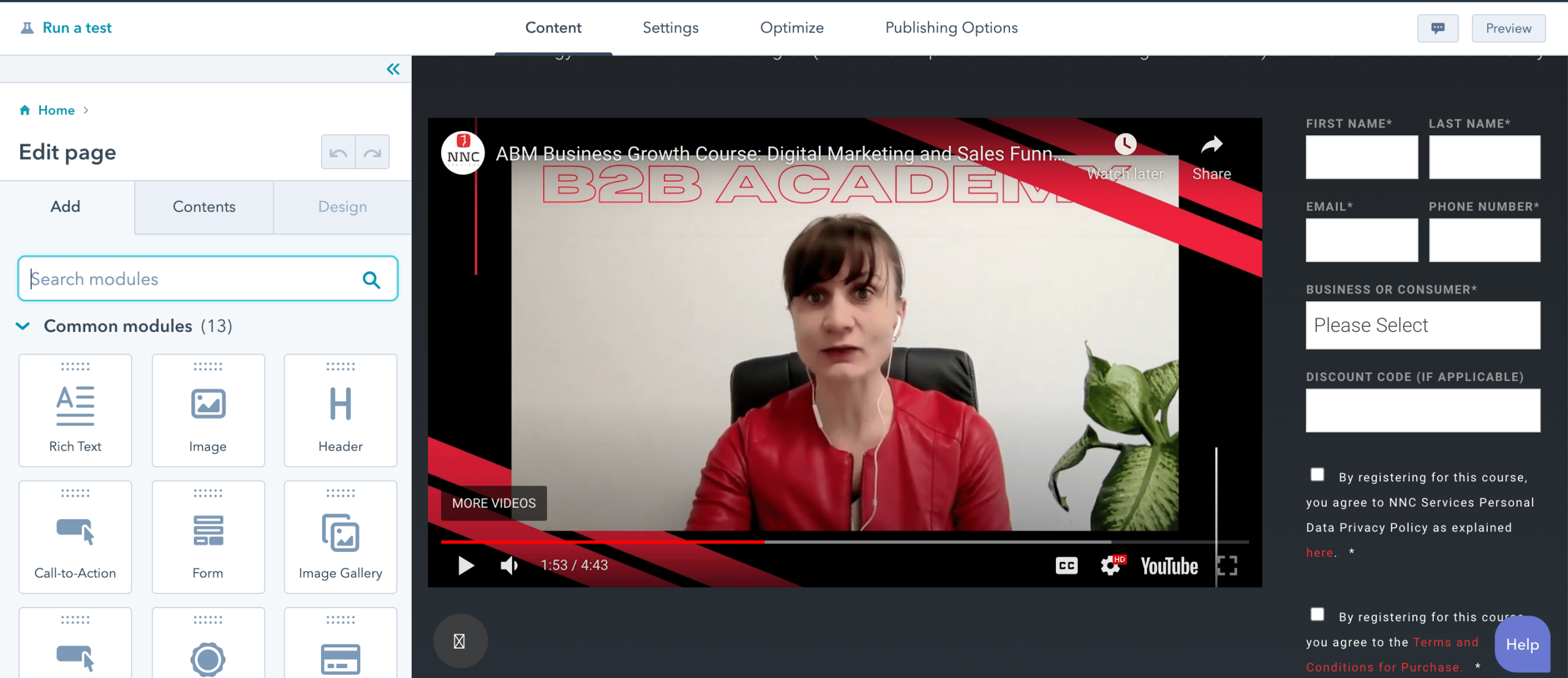
Regardless of design trends, high-performing landing pages consistently rely on the same structural components:
1. Clear, Benefit-Driven Headline
Visitors should understand the value of the offer within seconds. Headlines that focus on outcomes (not features) help reduce bounce rates and set expectations.
2. Scannable, Purpose-Driven Copy
Users rarely read landing pages word for word. Effective pages use:
-
Short paragraphs
-
Bullet points
-
Plain, direct language
The copy should explain why the offer matters and what problem it helps solve, without unnecessary marketing language.
3. Visuals That Support the Message
Images or videos should clarify the offer, not distract from it. In HubSpot, media elements should be:
-
Optimized for fast loading
-
Relevant to the offer
-
Accompanied by descriptive alt text for accessibility and SEO
4. Focused Forms with a Low Barrier to Entry
Forms are essential to conversion, but asking for too much information too early increases friction.
Current best practice is to:
-
Request only the data needed at that stage of the funnel
-
Use progressive profiling in HubSpot to collect additional data over time
5. Clear and Specific Call-to-Action (CTA)
A CTA should clearly state what happens next. Generic labels like “Submit” provide little context.
Effective CTAs:
-
Match the offer (“Download the guide”, “Get the checklist”)
-
Stand out visually
-
Reinforce the value, not just the action
6. Distraction-Free Layout
Because a landing page has a single goal, competing links and full navigation menus reduce conversion focus. In HubSpot, hiding the top navigation is a common and recommended practice for campaign-driven landing pages.
7. Mobile Responsiveness and Performance
A significant share of landing page traffic comes from mobile devices. Pages should:
-
Load quickly
-
Display forms clearly above or near the top of the page
-
Offer a frictionless mobile experience
8. SEO and Intent Alignment
Landing pages should still be discoverable. This includes:
-
Clear keyword alignment with the campaign intent
-
Descriptive page titles and meta descriptions
-
Content relevance to the search query
9. Thank-You Pages as Part of the Conversion Experience
Thank-you pages are not just confirmations, they are opportunities to:
-
Set expectations
-
Provide next steps
-
Introduce related content or offers
Final Takeaway
A well-built HubSpot landing page focuses on one goal, removes friction, and aligns message, design, and data capture into a single, conversion-driven experience.
If you want landing pages that support real lead generation, not just form fills, connect with the NNC team to design and optimize HubSpot landing pages aligned with your growth strategy.